Sailing Upwind and Downwind: Understanding Your Boat’s Point of Sail
Embarking on the journey of sailing requires understanding the fundamental principles that govern how a sailboat interacts with the wind. Mastering the art of sailing involves learning about different points of sail, allowing you to navigate effectively whether you’re heading upwind or downwind. This knowledge is essential for every sailor, transforming a novice into a confident navigator capable of harnessing the power of the wind.
Introduction to Sailing and Boat Sails
The Basics of Sailboats
A sailboat, or yacht, is a marvel of engineering, designed to move through the water using the power of the wind. Understanding the basic components outlined below is the first step toward mastering sailing skills.
| Component | Function |
|---|---|
| Hull | Provides buoyancy. |
| Keel | Prevents sideways movement caused by the wind. |
| Rudder | Steers the boat. |
Understanding Sails and Their Function
The sails are the engine of a sailboat, acting much like an airplane wing. The mainsail and head sail are the primary sails that capture the wind’s energy and propel the boat forward. How you trim the sails is critical; adjusting the sail trim based on the wind direction maximizes efficiency and speed. The interaction between the sails and the wind dictates the boat’s movement, making sail trim an essential sailing skill.
The Importance of Knowing Points of Sail
Knowing the points of sail is fundamental to effective navigation. The point of sail refers to the boat’s angle relative to the wind direction. A sailor must understand how to adjust the sails and steer the boat to achieve different points of sail, whether sailing upwind or downwind. The ability to sail upwind and downwind efficiently dramatically enhances your ability to sail the boat to your desired destination. Grasping these concepts is a key component to becoming a successful sailor.
Sailing Upwind: Techniques and Strategies
How to Sail Upwind Effectively
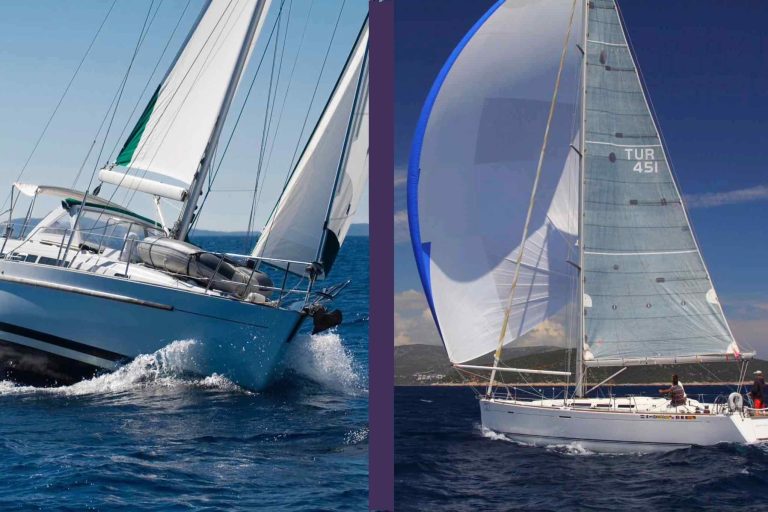
Sailing upwind, or sailing close-hauled, requires finesse and understanding of how the boat interacts with the wind. Since you cannot sail directly into the wind, the trick is to sail at an angle, typically around 45 degrees to the wind direction. This is where the art of sail trim comes into play. Adjusting the mainsail and head sail correctly allows the sailboat to make the most of the wind. The keel prevents the boat from being pushed sideways by the wind, enabling forward progress.
Understanding True Wind vs. Apparent Wind
When sailing upwind, it’s vital to differentiate between true wind and apparent wind. True wind is the direction of the wind when you’re stationary, while apparent wind is what you feel on the boat, influenced by the boat’s speed and direction. As you sail upwind, the apparent wind shifts forward. The sailor must constantly adjust the sail trim to match the apparent wind, optimising the boat’s performance. Understanding apparent wind helps the sailor to sail faster upwind.
Adjusting Your Sails for Upwind Conditions
To sail upwind effectively, precise sail trim is essential. The mainsail should be trimmed to be close to the wind but not so tight that it stalls. The head sail should be adjusted similarly, working in harmony with the mainsail. If you sail too close to the wind, the sails will luff or flap, indicating that you’re not making efficient progress. When the boat heels excessively, ease the sails slightly to reduce the heel and improve control. Master sail trim to sail the boat to windward effectively.
Sailing Downwind: Best Practices
Techniques for Sailing Downwind
Sailing downwind involves different techniques compared to sailing upwind. The goal is to capture as much of the wind as possible to propel the boat forward. The mainsail is typically eased out to its maximum extent, and the headsail may be used in a variety of ways, depending on the wind direction. The keel still plays a role in stability, but the focus shifts to managing the boat’s speed and preventing accidental gybes. With the wind blowing from behind, it offers a different challenge.
Choosing the Right Sails for Downwind Sailing
For downwind sailing, specialised sails can significantly enhance performance. A spinnaker or a gennaker are common choices, designed to maximise the sail area exposed to the wind. These sails are larger and lighter than the standard jib and are specifically shaped to catch the wind when sailing with the wind. The proper sail choice depends on the specific conditions, including the wind strength and the angle of the boat to the wind direction. Choosing the right boat sails is essential for optimal performance and safety.
Managing Speed and Stability Downwind
Sailing downwind can be exhilarating, but it also requires careful management of speed and stability. As the boat accelerates, the risk of losing control increases. It’s crucial to steer smoothly and avoid sudden changes in direction, which can lead to a broach or an accidental gybe. Using techniques like preventers on the boom can help maintain stability. The sailor must be vigilant and proactive, anticipating changes in the wind and adjusting the sails accordingly. Mastering these techniques allows the sailor to maintain control and enjoy the ride.
Comparing Upwind and Downwind Sailing
Key Differences Between Upwind and Downwind Points of Sail
When comparing the experience of sailing upwind versus downwind, several key differences emerge. Sailing upwind, also known as sailing close-hauled, demands precise sail trim and a keen understanding of apparent wind. Since you can’t sail directly into the wind, sailors need to tack, sailing closehauled at about 45 degrees closer to the wind. Zig-zagging back and forth to make progress upwind. In contrast, downwind sailing is about maximising sail area and managing speed as the wind is blowing from behind. The point of sail changes drastically, affecting how the boat moves and how the sailor interacts with the elements.
Advantages and Disadvantages of Each Point of Sail
Each point of sail offers distinct advantages and disadvantages. The following table summarises some key aspects of upwind and downwind sailing:
| Point of Sail | Characteristics |
|---|---|
| Upwind | Allows progress against the wind, requires active sail trim, can be slower. |
| Downwind | Can be faster, less stable, requires careful management. |
The right approach depends on the overall goals and conditions.
When to Use Each Technique
Knowing when to use each technique is crucial for effective sailing. Sailing upwind is essential when your destination lies toward the direction from which the wind is blowing. In these situations, helmsman will be tacking back and forth sailing at angles to the wind. Downwind sailing is ideal when your destination is in the same direction as the wind. Understanding the boat’s capabilities and the wind direction allows the sailor to optimize the route and make efficient progress. You trim the sails differently in each scenario to use the point of sail to its fullest. When long distance cruising, the aim is to pick a weather window where most, if not all miles avoid an upwind destination.
Conclusion: Mastering the Art of Sailing
Recap of Key Points
To recap, mastering the art of sailing involves understanding the fundamentals of sailboats, boat sails, how sails are trimmed and the critical points of sail. Sailing upwind requires a nuanced understanding of apparent wind, how this changes relative to the boat speed and precise sail trim to counteract the limitation that you cannot sail straight into the wind. Downwind sailing, on the other hand, focuses on maximizing sail area and managing speed as the wind is blowing. These core principles are essential for any sailor looking to enhance their skills.
The Importance of Practice and Experience
While understanding the theory behind sailing upwind and downwind is important, practical experience is invaluable. The more time a sailor spends on the water, the better they become at reading the wind, adjusting the sails, and anticipating changes in conditions. With practice, sailors develop an intuitive feel for how the boat moves and how to respond to different situations. Through experience, you refine your sail trim and can sail the boat effectively. Dinghy sailing is one of the best ways to understand how the wind and sails affect how the boat is sailing. Larger yachts can mask the subtle changes that occur which can mean you only react when these go drastically wrong.
Resources for Further Learning
For those eager to deepen their knowledge of sailing, numerous resources are available. Sailing schools offer courses ranging from basic to advanced levels, providing hands-on instruction and valuable insights. Books, online forums, and sailing clubs are also great sources of information and support. Continual learning is the key to becoming a confident and skilled sailor, capable of navigating any challenge, whether sailing upwind or downwind. Understanding points of sail and learning the best way to trim sails is important to improve your sailing skills.